Build Tools, Not Bots
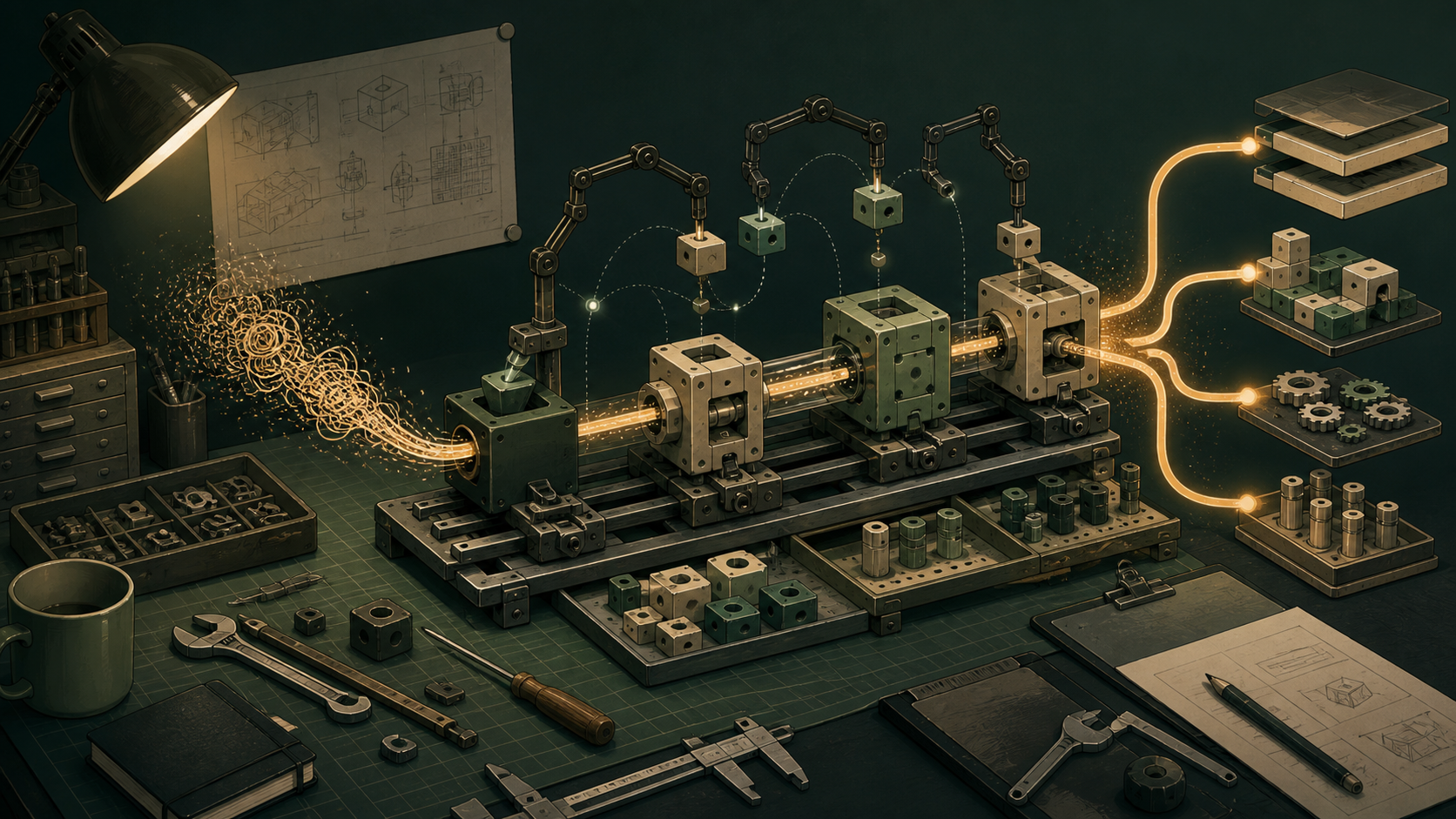
The default move right now is to bolt AI onto the product. A chatbot on the marketing site. A "smart assistant" in the dashboard. A generative feature nobody asked for. The thing that shipped is, at best, a slightly better autocomplete.
It's the wrong play. Every one of those features rides on the same models the competition is using. The moment the model gets cheaper or better, the feature gets replicated in an afternoon.
The sweet spot isn't out there. It's in here.
The Real Asymmetry
Every business has a backlog of internal friction. Workflows held together by spreadsheets and Teams messages. Tools built six years ago by someone who's since left. Support teams pasting the same answer fifty times a day.
None of it shows up on a roadmap. Two years ago, fixing it was expensive so it waited. That calculus is gone. A developer with Claude Code and a weekend can ship what's been sitting in the "someday" backlog for three years, tuned to how the team actually works.
Consumer AI is a race to the bottom. Internal AI is a compounding advantage nobody else can see.
Constraints Are Leverage
The biggest lever on AI output quality isn't the model, it's the surface you point it at. Narrow the surface, give the agent a small vocabulary of well-designed primitives, and the same model produces work that's close to production on the first pass.
This is why I built DryUI, a component library built AI-native. Narrow surface, predictable primitives, strict tokens. The whole thing fits in an agent's context. It stops improvising and starts composing.
The teams getting the most out of AI aren't the ones with the best prompts. They're the ones building their own tools. The guardrails live in the tool.
Why Nobody's Doing It
Because it's unsexy. You can't put "we rewrote our internal CRM" on a board slide and get the same reaction as "we launched an AI assistant."
The last wave of the internet played out the same way. Everyone remembers the consumer brands. Almost nobody remembers the real revenue shift happened inside businesses. The companies that point small AI-fluent teams inward now will look in two years like they're operating in a different gear.
The bots are a distraction. Build tools.